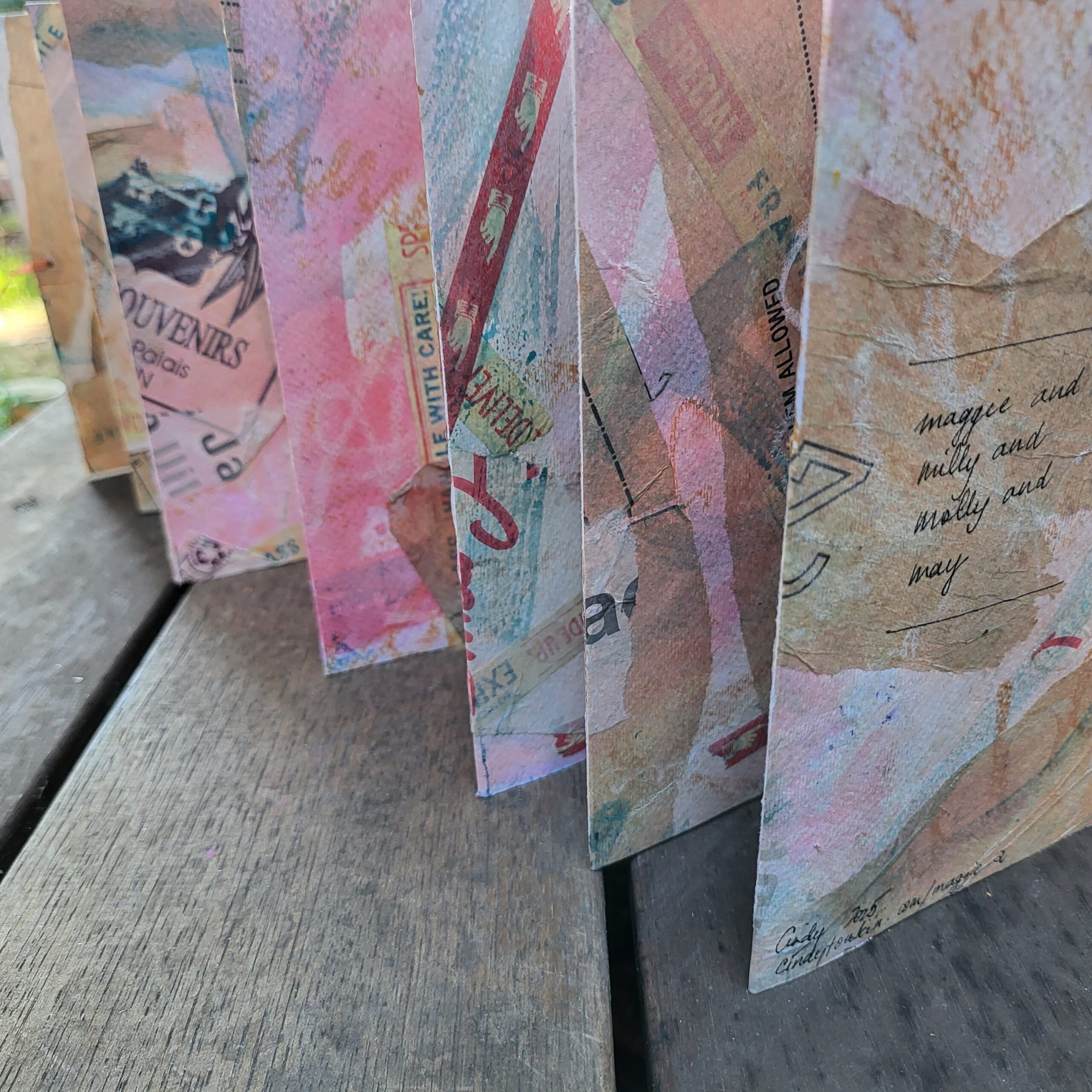
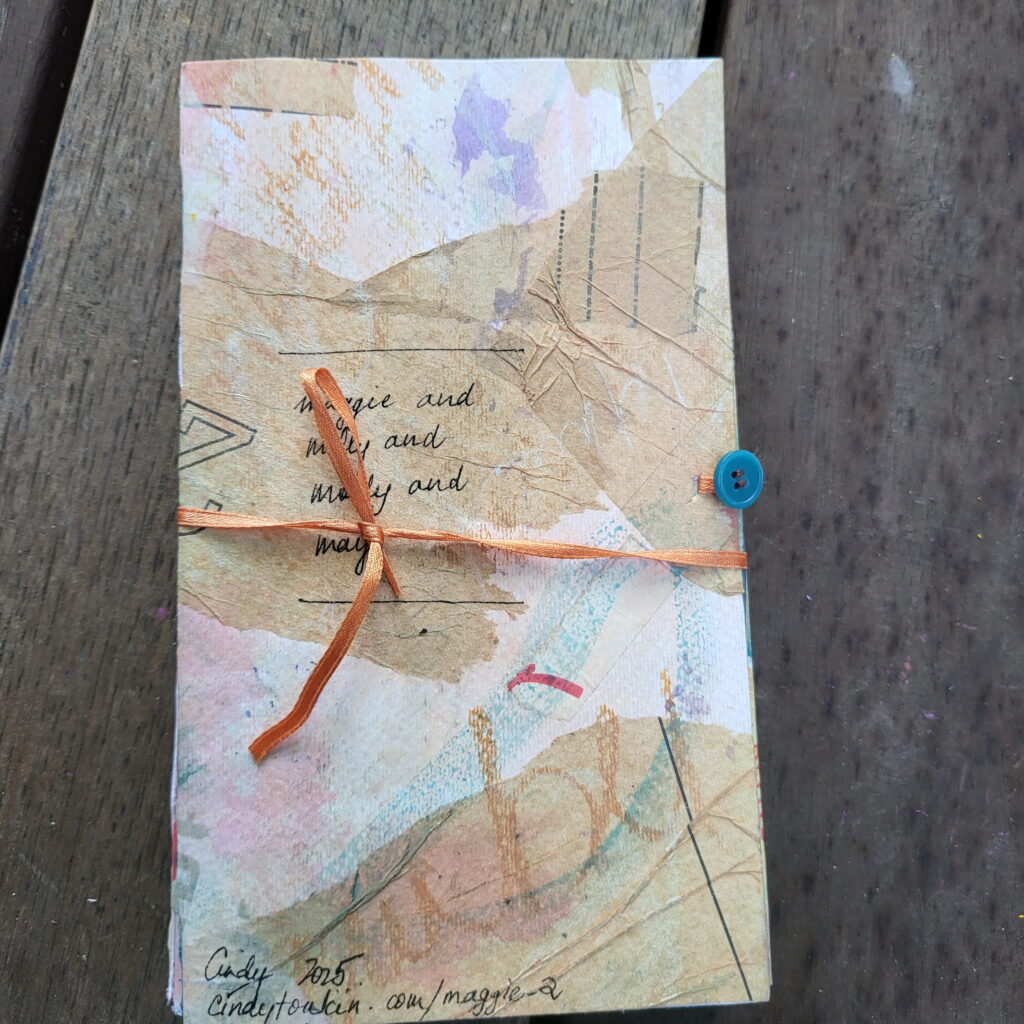
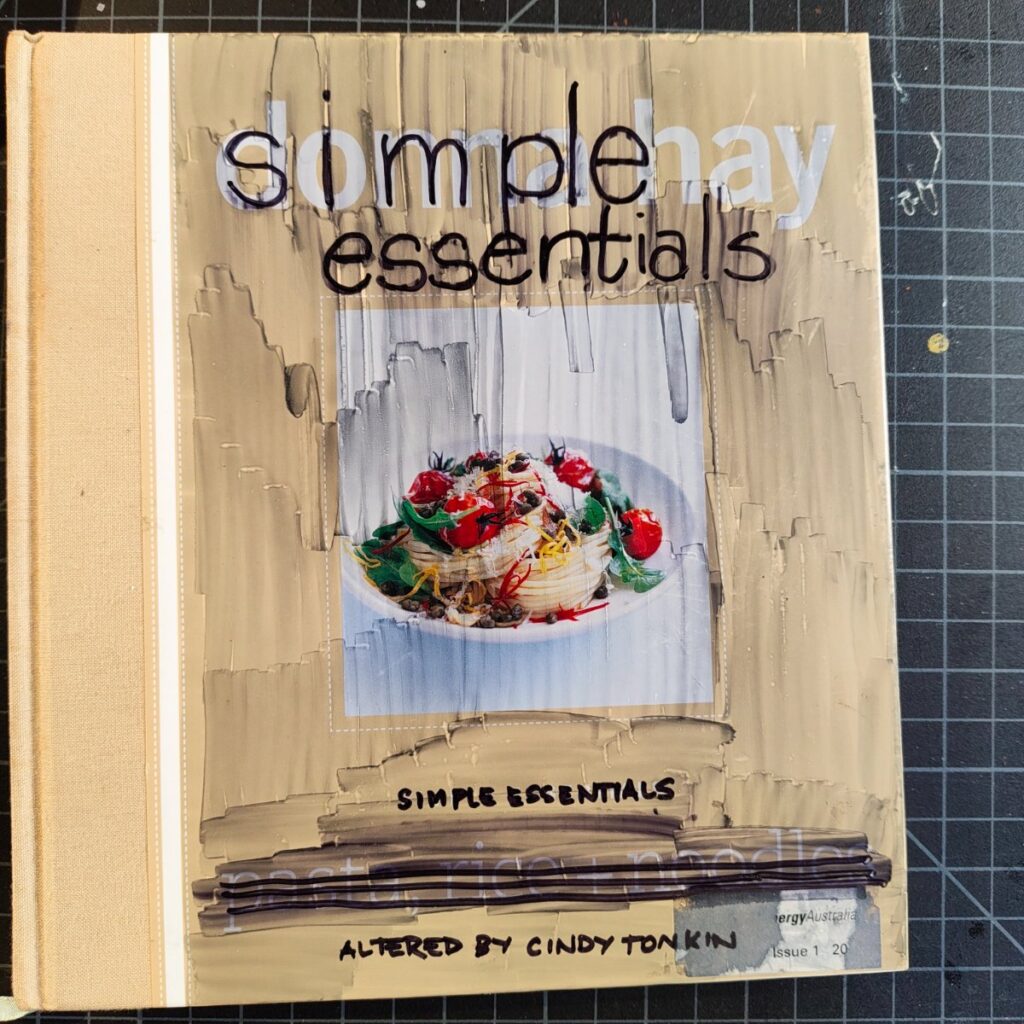
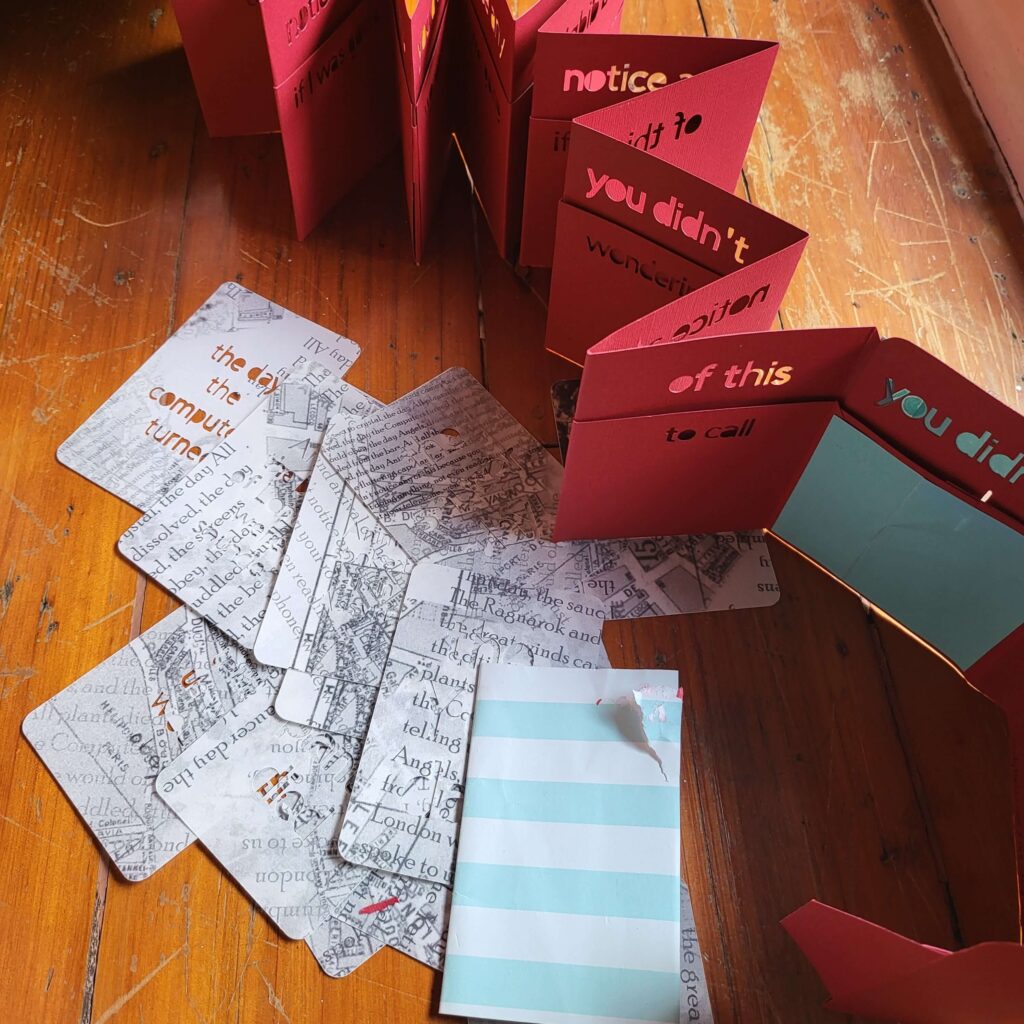
Maggie and Milly and Molly and May is an e.e. cummings work I have used before.
Here is one I’m not that fond of and a heap I did as little 3d pieces at the Coastal exhibition I did with Anna and Pip and Margaret in 2008 which I do like.
This one was years in the making.
In 2016 or so I got a hankering for collage. I had just done the Encaustic workshop at Sturt Winter School, and I had a truckload of ephemera from trips to Paris and such.
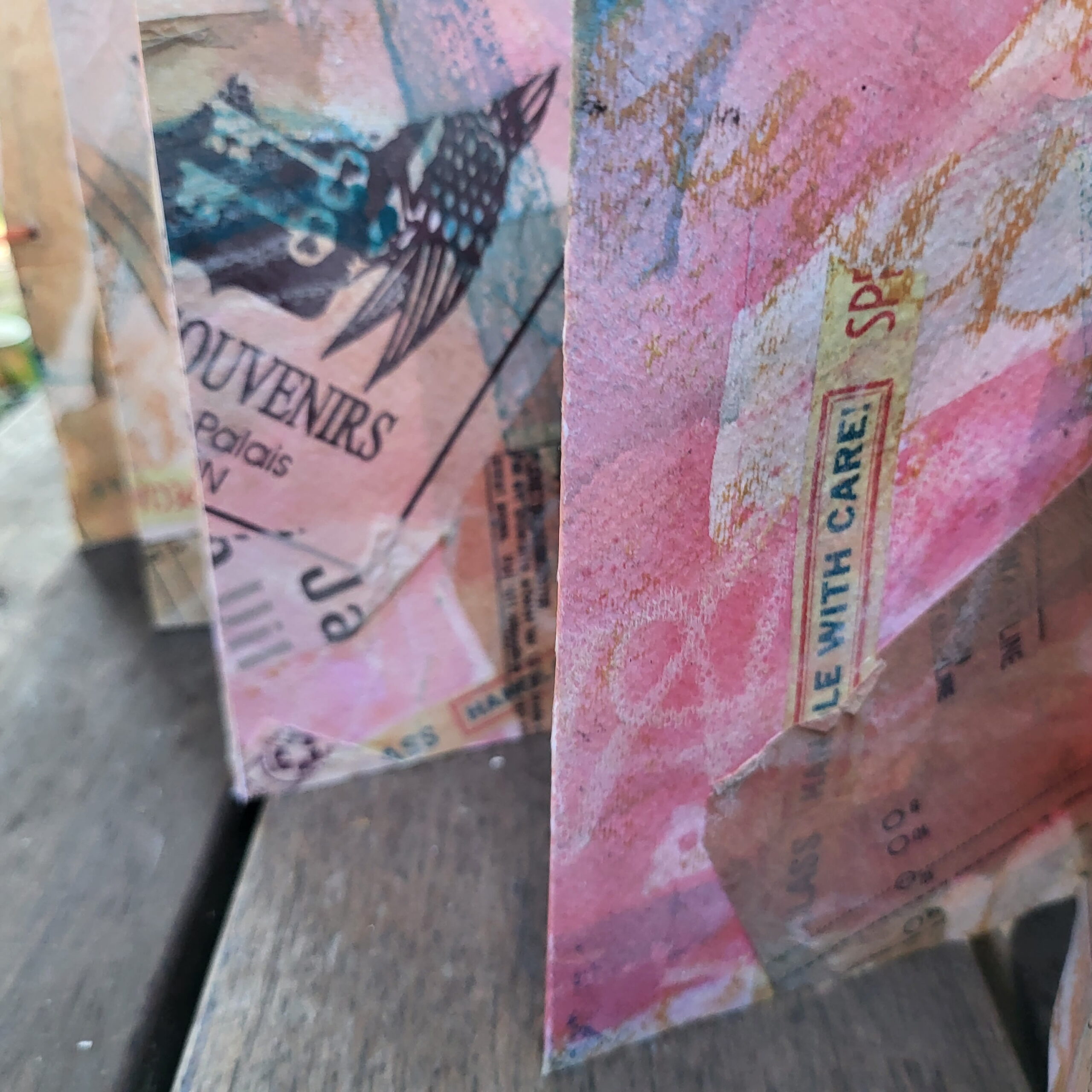
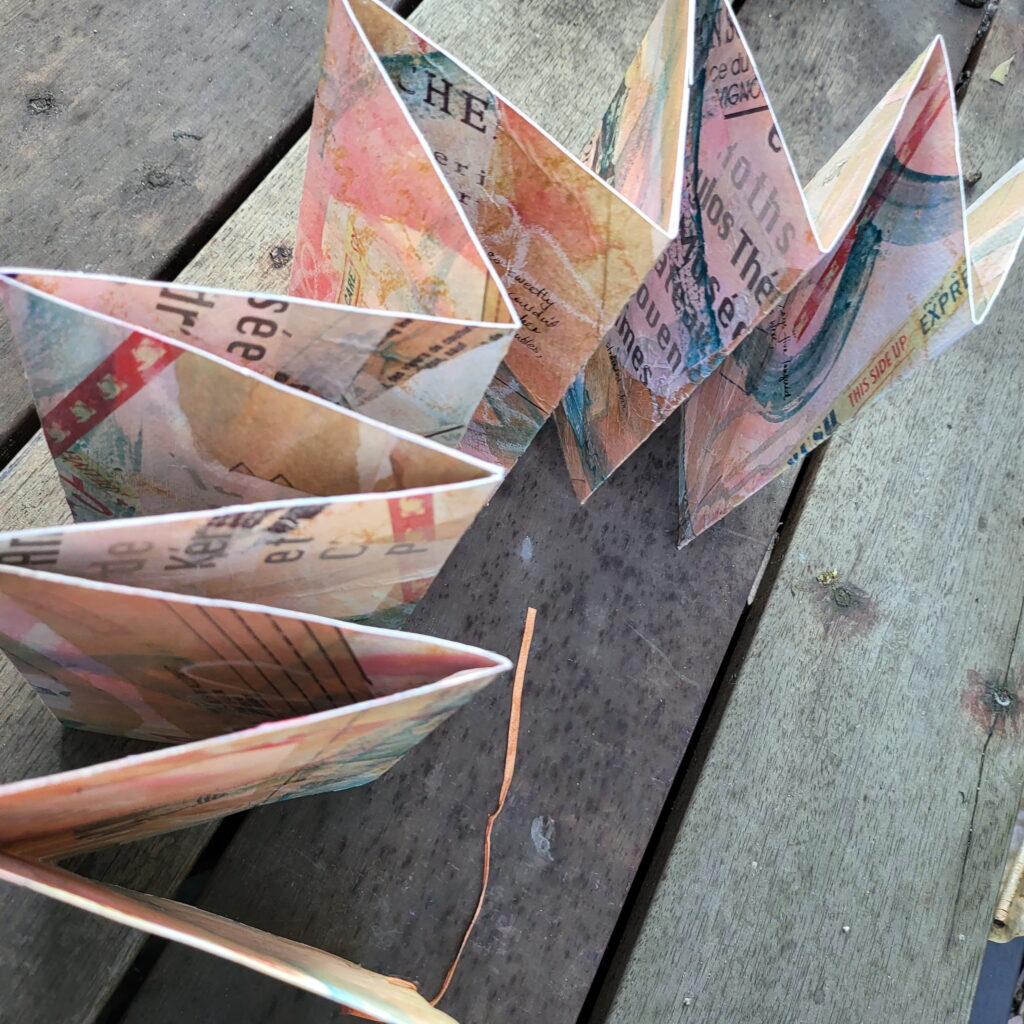
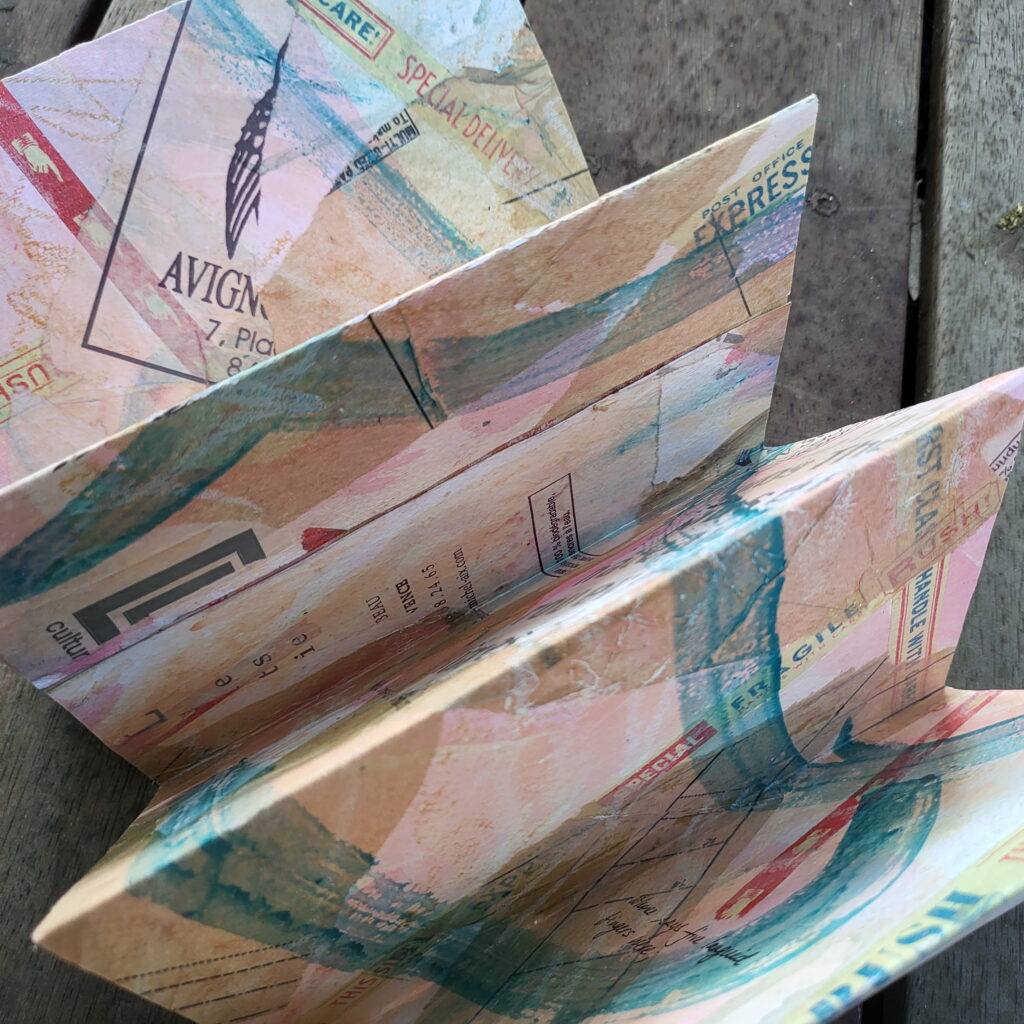
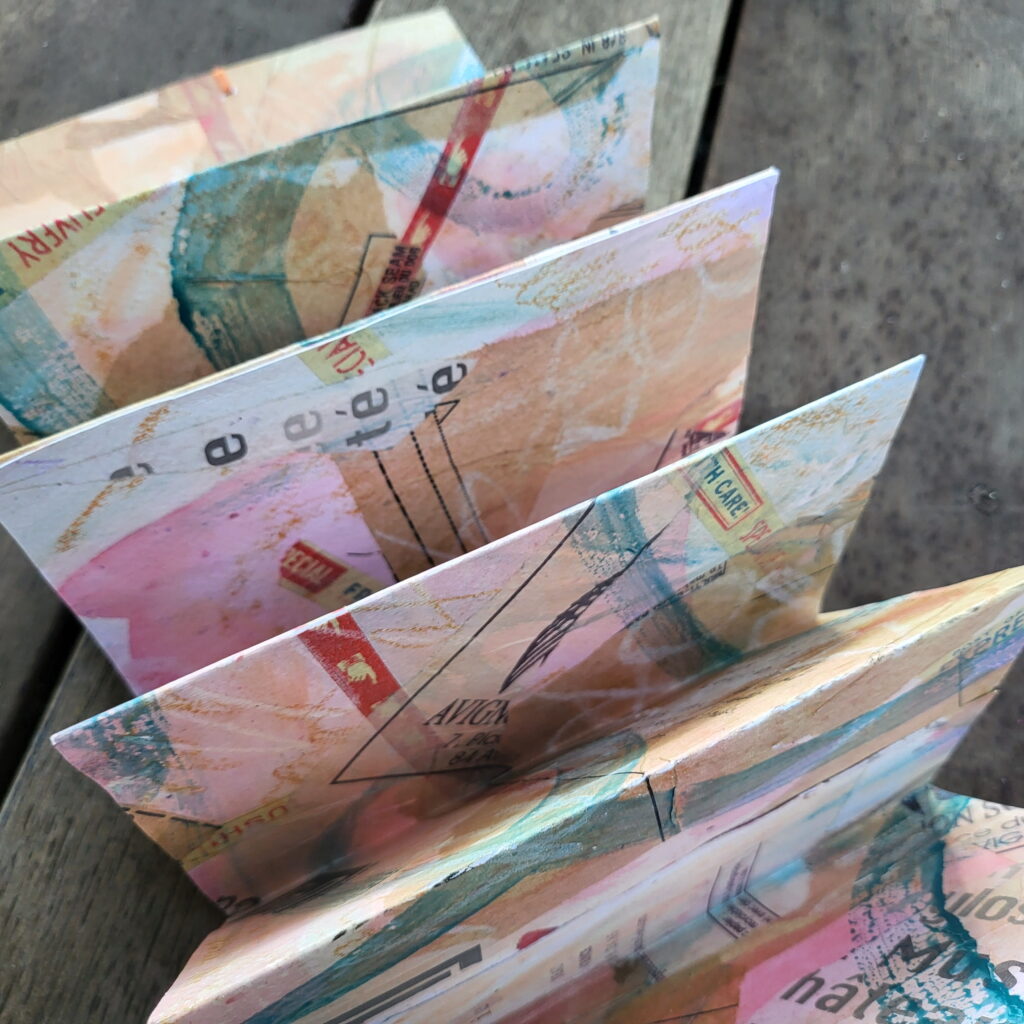
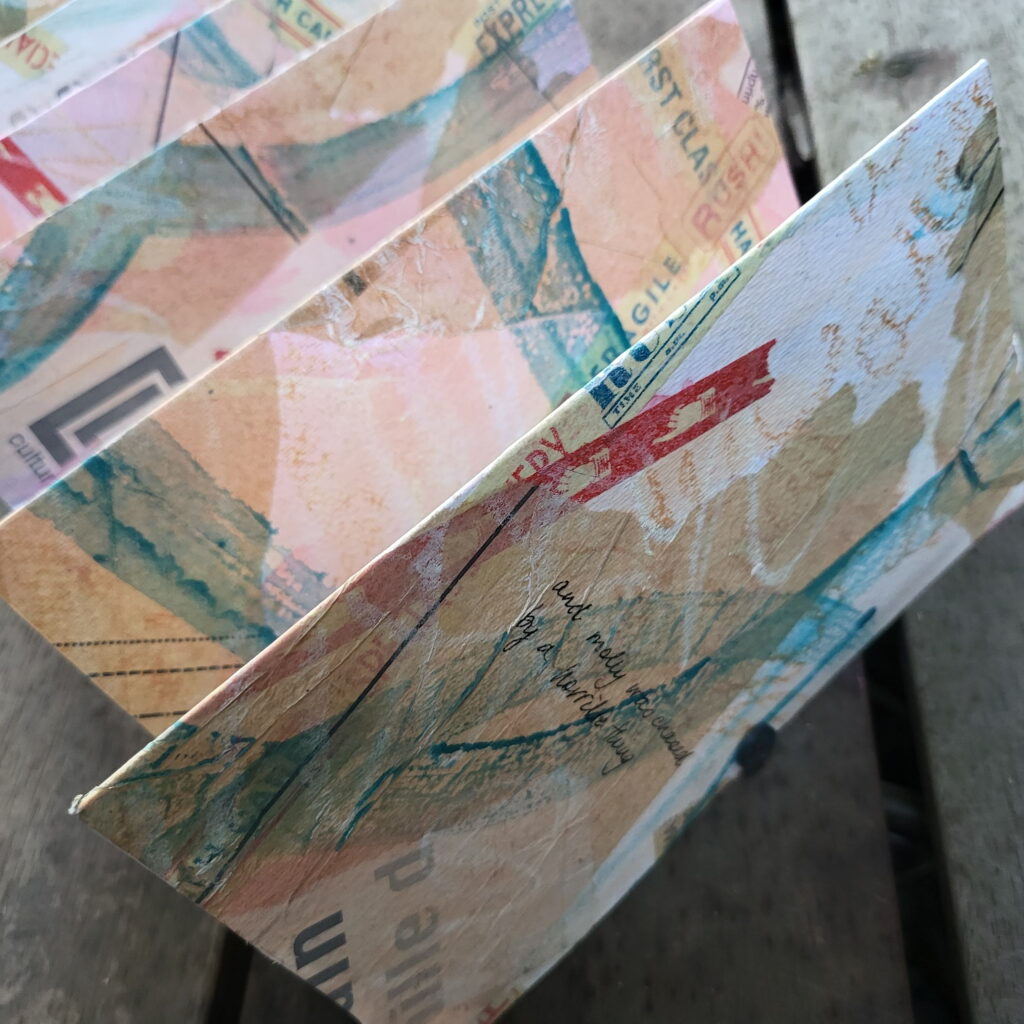
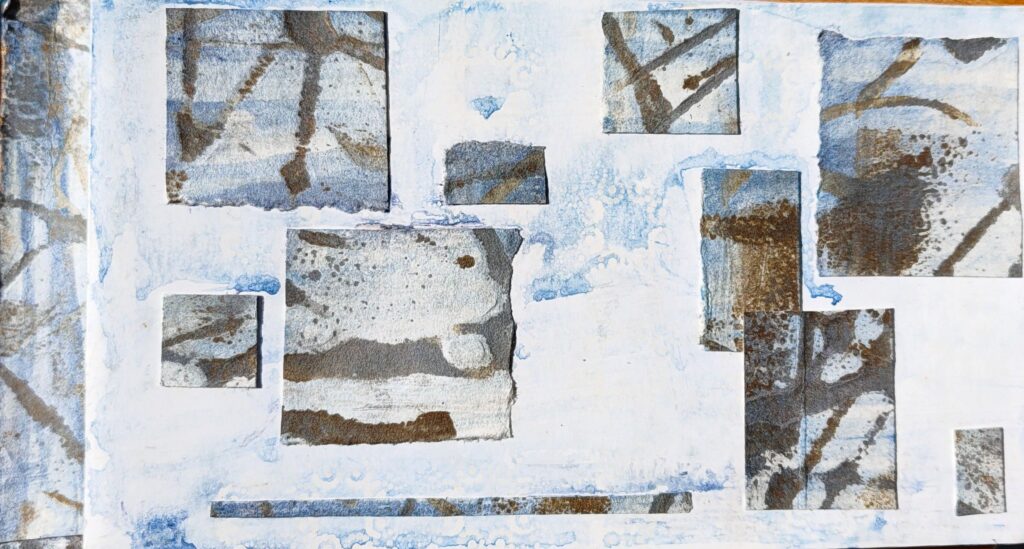
I decorated both sides of this robust drawing paper with water colour then with oil pastel, and then washi tape, pattern paper, bits of bags from newsagents and museums from Paris and Lyon and Italy and who knows where else – my guide was probably pastel colours mostly. At some point recently I added some Gansai Tambi watercolour.
One of the hard things for me is to make the back and front of a work look like they belong together – no matter what I do to “match” something i get inspired and do something – often making the “back” look better than the original piece on the front.
I’ve managed this time to prety much match the two sides.
I have developed a “method” for these randomly collaged works to make them look better when I’m not feeling like they are done yet, and even though I may not have done so for this work I don’t need to write it down again if i do it now (these write ups take so many hours!).
Things i try when a work / book isn’t looking right
- add pattern paper / tissue layers
- add a bold black or gold line / lines
- if there’s a layer of tissue it will have texture – highlight that texture with oil pastels (usually in more than one colour – so I get a pleasing mix of a blue and pink to make a deeper crimson, but not 100% all the same).
- add a poem
- cut out a window
- add an envelope
- collage more on top, and if it’s a book, it’s probably gonna look better within each page with a focus image or colour patch
- get a piece of coloured paper that works with the “back” so it unites back and front
- draw or doodle with a clear or coloured oil pastel, then water colour /acrylic wash over the top to get the resist (if the oil pastel is just a candle/clear wax it gives pleasing “invisible” stuff
- mask some of it with acrylic paint
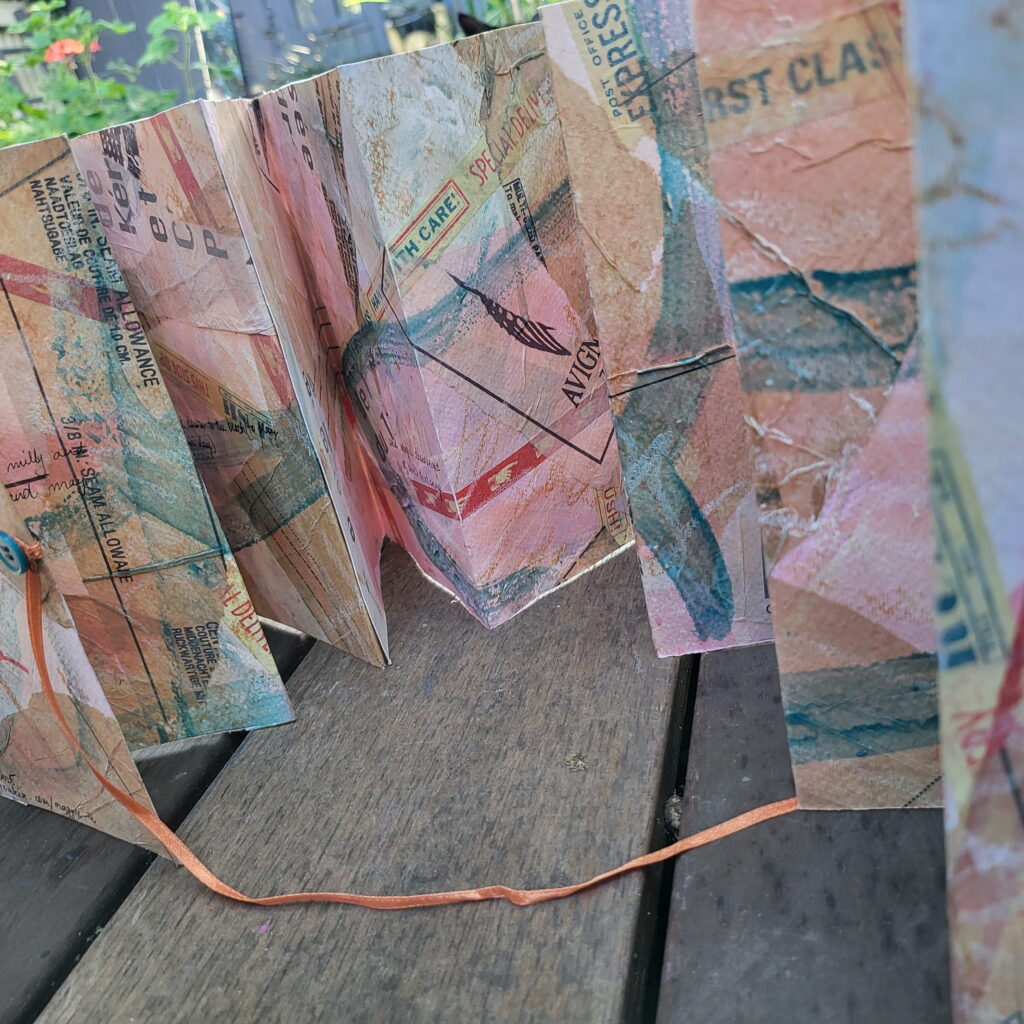
In this case I added a ribbon to keep it closed, but I’m still remembering/learning where to attach the ribbon and button properly – there probably just needs to be one with ribbon long enough to wrap around the whole thing (or half way through the ribbon so it can tie wherever the reader chooses.
At BAG yesterday I got a chance to talk through some of my “theory” on what i’m trying to do with these kinds of works. Similar to my 2d works I want it to look good from a distance, but reward the viewer/reader when they look more closely and find details they didn’t expect (or did expect?). Last week I sped through about six of these works. At first I felt “guilty” that they took so little time, and then I realised (partly in discussion with BAG yesterday) that each one was several years in the making (hence my opening line of this post). Collections of ephemera. Sorting and reshelving of said ephemera to create serendipity (by no means on purpose). Collecting of random bits (photos of shoes or buildings or choice words from magazines).
Pattern paper I bought, for example, after my first workshop learning with Robyn Kinsela at Sturt. I cannot find any entries on that. I think it was winter 2008. Rob gave me some. After that i went to the Salvos in Marrickville and bought 10 or 20 of them for a dollar or so each. since then people GIVE me pattern papers. i saw them for sale at Reverse Garbage last week for $2 and at The Sewing Basket for more (those were people who actually wanted to sew them!). That’s a collection with age.
So if I count the age of the ephemera and components (the museums James and I visited in 2004 and 2006 are represented in the collage elements of this work) they are all ANCIENT!!
Here are some pix and a guided tour when I point out some of the origins of the bits.